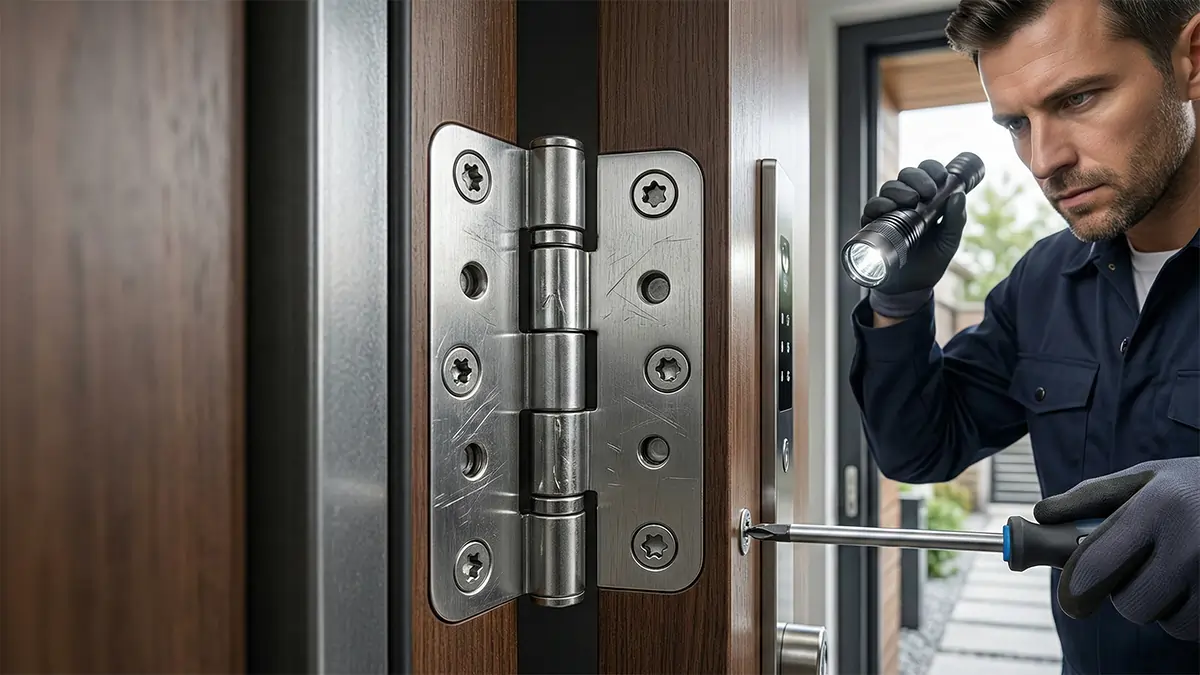
Have you ever noticed how a simple thing like a door hinge can make or break the smooth opening and closing of your doors? One day, your door swings perfectly, and the next it’s squeaking like an old haunted house or sagging at one corner. Door hinges are small but super important parts of every home.
In this article, I’ll walk you through everything about them in easy words – from different types to how to pick the right one, install it, fix common problems, and keep them working for years. Let’s dive in like we’re chatting over a cup of chai!
Types of Door Hinges
There are many kinds of door hinges, and each one has its own job.
Butt Hinges
These are the most common ones you see on regular home doors. They have two flat leaves joined by a pin in the middle. Simple and strong for inside doors.
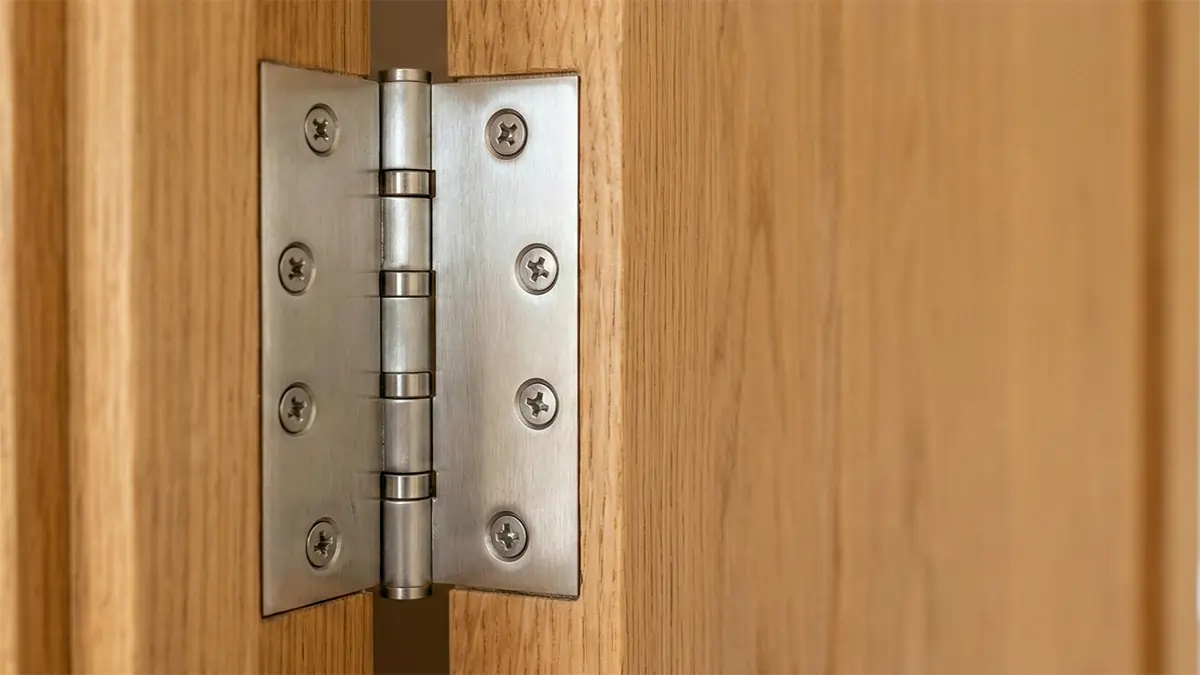
Ball Bearing Hinges
These have tiny balls inside that make the door open super smoothly and quietly. Great for heavy doors or ones you use a lot, like main entrance doors.
Concealed Hinges (also called hidden or European hinges)
These stay hidden when the door is closed, giving a clean, modern look. Perfect for kitchen cabinets or fancy bedroom doors.
Spring-Loaded Hinges
They have a spring that pulls the door shut automatically. Handy for bathroom or kitchen doors that need to close on their own.
Continuous Hinges (piano hinges)
These run the full length of the door. Very strong and good for heavy or long doors.
Pivot Hinges
The door turns around a single point at the top and bottom. Used for big or modern glass doors.
Pick the type based on your door – simple butt hinges work for most homes!
Materials Used in Door Hinges
Door hinges come in different materials, and the right one depends on where you use them.
Steel
Cheap, strong, and very common for inside doors. It can rust if not painted or coated well.
Stainless Steel
Best for outside doors or wet places like bathrooms because it doesn’t rust easily. A bit more expensive but lasts forever.
Brass
Looks classic and shiny, resists rust nicely. Often used for fancy or traditional homes.
Bronze or Aluminum
Good for outdoor use too, lightweight and corrosion-resistant.
For wet areas or outdoors, always go for stainless steel or brass to avoid rust problems later.
Choosing the Right Door Hinges
Here are the important steps to help you choose the right door hinges.
First, check your door size and weight. Normal inside doors (around 30-35 kg) need 2-3 hinges. Heavy outside doors need stronger ones.
Measure door thickness – most inside doors are 35mm thick, outside ones 45mm or more. Get hinges that match.
Think about the look – match the finish (like chrome, black, antique brass) to your door handles and room style.
For high-use doors, pick ball-bearing ones for smooth action.
Number of hinges: Use one hinge for every 75 cm of door height. So, a standard 2m door needs 3 hinges.
Quick tip: If replacing old ones, take one old hinge to the shop to match the size and screw holes.
How to Install Door Hinges
Installing or replacing hinges is not too hard if you go slowly. Here is a breakdown of the important steps to help you install door hinges.
- Take the door off – Remove old hinge pins with a hammer and nail (tap from bottom up).
- Place the door flat on a soft surface.
- Mark hinge spots – Usually 15-20 cm from the top and bottom for two hinges, middle for three.
- Put the hinge on the door edge and trace its outline with a pencil.
- Cut the recess (mortise) – Use a sharp chisel to carefully remove wood inside the outline so the hinge sits flat.
- Screw the hinge to the door first.
- Hold the door in the frame, mark the frame side, and cut a recess there, too.
- Screw the hinge to the frame.
- Put the door back, insert pins, and test!
If it’s your first time, watch a quick YouTube video – it helps a lot. Use good screws and don’t overtighten.
Common Issues with Door Hinges and Fixes
Doors act funny sometimes because of the hinges. Here are the usual problems and easy fixes:
Squeaky hinges
Apply a drop of oil (like machine oil or WD-40) on the pin. Open and close the door a few times to spread it.
Loose or sagging door
Tighten the screws. If holes are stripped, use longer screws or fill with wood glue and toothpicks, then screw again.
The door doesn’t close properly.
Check if hinges are bent or misaligned. Straighten gently with pliers or replace if bad.
Rusty hinges
Clean rust with sandpaper or vinegar, then oil. Replace if too bad.
Maintaining Door Hinges for Longevity
Want your hinges to last 10-20 years? Just do these simple things every 6 months:
- Wipe them clean with a dry cloth to remove dust.
- Put a little lubricant (oil or grease) on the pin and moving parts.
- Tighten loose screws once in a while.
- Avoid slamming doors – it wears them out fast.
- For outside hinges, check for rust and paint if needed.
A little care goes a long way!
Conclusion
Door hinges may seem small, but they keep your home running smoothly every day. Whether you’re fixing a squeaky door or upgrading your whole house, understanding types, materials, and basic care makes a big difference. Next time your door gives trouble, you’ll know exactly what to do. Got any hinge stories or questions? Drop them in the comments – I’d love to hear!

I am Hazel, a passionate author covering Business, Home Decor, Trending Topics, Jobs, Health, Education, and Technology. I am dedicated to helping readers stay informed and prepared in a rapidly evolving world. Through clear insights into market trends, learning opportunities, and emerging health and technology innovations, I strive to provide practical knowledge that promotes a smarter, healthier, and more productive lifestyle.